Different speaker diaphragm materials produce different sound qualities
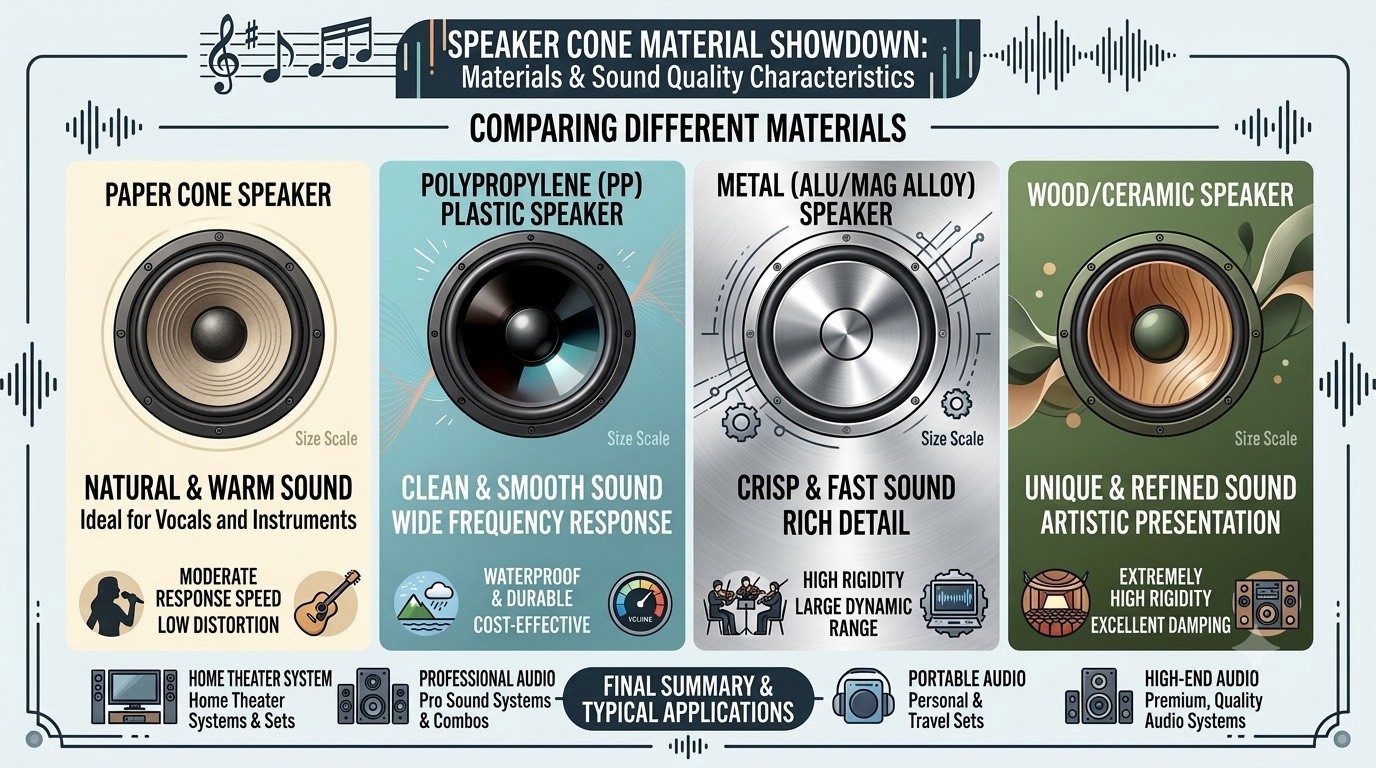
The speaker diaphragm (cone) material directly determines its rigidity, weight, and internal damping, which in turn affects sound sensitivity (efficiency) and tonal characteristics
Q: How does the "diaphragm material" affect the sound? How should I choose?
A:
The diaphragm acts like the "vocal cords" of a speaker. Different materials offer unique tonal charms and driving efficiencies:
The diaphragm acts like the "vocal cords" of a speaker. Different materials offer unique tonal charms and driving efficiencies:
- Classic Paper Cone — The top choice for warm, natural vocals
Lightweight with a fast response, making it highly easy for amplifiers to drive. It delivers a warm, pleasant, and non-fatiguing sound with a full-bodied midrange. It is ideal for listeners who enjoy lyrical pop, vocal performances, and jazz. - PP (Polypropylene) Cone — The weather-resistant, balanced all-rounder
This material provides excellent internal damping, resulting in a smooth, gentle sound with minimal distortion. It is unaffected by humid environments and remains comfortable to listen to for long periods, making it perfect for background music and daily media playback. - Metal Diaphragm (Aluminum/Magnesium Alloy) — The high-resolution tool for rich details
Extremely rigid with an incredibly agile and fast response. It clearly reproduces instrument percussion details and bright high frequencies, making it best suited for audiophiles seeking high resolution, dynamic tension, and crisp metal strikes. - Woven Composite Fiber (Carbon/Glass Fiber) — The solid choice for rhythm lovers
Combining high strength with low weight, this material does not easily distort at high volumes. It delivers a solid, tight sound with excellent low-frequency elasticity, making it ideal for listeners who love heavy beats, electronic pop, and cinematic sound effects.